Tolstoy’s The First Step (1892): What He Actually Argued About Eating Animals
In 1892 Leo Tolstoy wrote a preface to the Russian translation of an English book about the ethics of eating animals. The preface outgrew the book. Published in English as “The First Step”, it contains one of the most quoted slaughterhouse passages in European literature — and an argument that has almost nothing to do with nutrition. This is the first article in a series on the people behind vegetarian and vegan thought. We start with what Tolstoy actually wrote, not with what is attributed to him.
What he published, and when
The essay was not a book and was not conceived as one. Aylmer Maude, Tolstoy’s authorised English translator, printed a note at the end of the text in Essays and Letters: “[1892.] The above essay was written as Preface to a Russian translation of Howard Williams’ The Ethics of Diet.” Williams’ book had appeared in English in 1883 — a long anthology of writers from antiquity onward who had argued against eating flesh. Tolstoy read it, admired it, and agreed to introduce the Russian edition.
A word about dates, because they matter for a piece of this kind. Copies of the essay circulate online with the year given as 1896, and at least one of those copies carries an open warning from its own publisher that the text exists in altered versions and that exactness cannot be guaranteed. The 1892 date used here is the one printed in Maude’s authorised edition, at the foot of the essay itself. Where this article quotes Tolstoy, it quotes that edition.
The argument: virtues come in an order
Tolstoy’s claim is structural, and he makes it before he mentions food at all. People who want to live well, he writes, usually try to acquire good qualities in whatever order appeals to them — and then wonder why nothing holds. He thinks there is a fixed sequence. “A correct order of succession in the attainment of virtues is an indispensable condition of advance towards a good life, and consequently the teachers of mankind have always prescribed a certain invariable order for their attainment.”
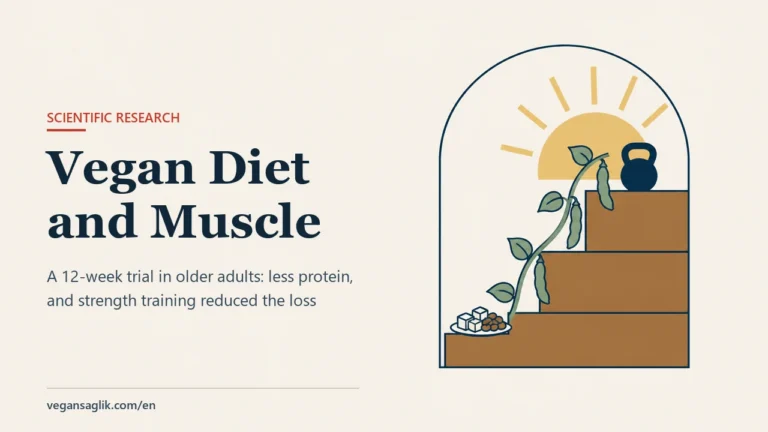
The image he uses is a staircase. Moral teachings, he says, “set up that ladder which, as the Chinese wisdom has it, reaches from earth to heaven, and the ascent of which can only be accomplished by starting from the lowest step.” The first step is self-restraint, and the most basic form of self-restraint is what you do with your appetite. Hence the sentence that opens the essay: “Fasting is an indispensable condition of a good life, whereas gluttony is, and always has been, the first sign of the opposite — a bad life.”
This is worth stating plainly, because it is often lost when the essay is quoted: Tolstoy is not arguing that a plant diet makes you healthier. He is arguing that self-control is the entry point to a moral life, that diet is where self-control is first tested, and that killing animals for pleasure fails that test. The vegetarianism follows from the ethics, not from physiology.
The slaughterhouse in Tula
The essay’s most famous section is reportage. Tolstoy had wanted to see a slaughterhouse ever since reading Williams’ book, and put it off: “at first I felt ashamed to do so, as one is always ashamed of going to look at suffering which one knows is about to take place, but which one cannot avert”. Then he went. “A few days ago I visited the slaughter-house in our town of Toula. It is built on the new and improved system practised in large towns, with a view to causing the animals as little suffering as possible.”
That detail — the modern, improved facility, designed to reduce suffering — is doing deliberate work. Tolstoy is not describing a backward operation. He is describing the best version available, and then describing what happens inside it anyway. The passage that follows is precise about sequence, sound and time, and it is still, more than a century later, difficult reading.
Before the visit he sets up the contradiction he is aiming at in a single exclamation: “Christianity and morality with beefsteaks!” The target is not the butcher. It is the respectable person who holds a moral self-image and delegates the killing.
The butcher’s answer
On the road Tolstoy meets a young butcher and asks whether he feels sorry for the animals he kills. The exchange is short and does more argumentative work than several pages of theory:
“He gave me the usual answer: ‘Why should I feel sorry? It is necessary.’ But when I told him that eating flesh is not necessary, but is only a luxury, he agreed; and then he admitted that he was sorry for the animals. ‘But what can I do? I must earn my bread,’ he said.”
Two moves happen here. The word “necessary” is tested and gives way — once it is replaced by “luxury”, the man’s own sympathy surfaces immediately. And then the economic answer arrives, which Tolstoy does not mock: the butcher has to eat too. The pressure in the essay is aimed upward, at the consumer whose demand creates the job, not downward at the person holding the knife.
His answer to the obvious objection
Tolstoy anticipates the obvious objection. If the wrongfulness of eating animals has been argued for as long as Williams’ anthology shows, why has almost nobody acted on it? He notes that the question tends to come from a particular quarter — it “will be asked by those who are accustomed to be led by public opinion rather than by reason.”
His answer does not claim a quick victory. “The answer to this question is, that the moral progress of humanity — which is the foundation of every other kind of progress — is always slow; but that the sign of true, not casual, progress is its uninterruptedness and its continual acceleration.” Slowness, in other words, is not evidence that an argument is wrong. What he looks for instead is whether the movement stops.
It is a modest standard, and an unusually falsifiable one for a moral essay: not how many people have changed, but whether the change keeps going. Written in 1892, when organised vegetarianism in Europe was a few decades old and tiny, that was a claim about the future rather than a description of the present.
What the essay does not say
Read honestly, “The First Step” is narrower than its reputation, and the gaps are worth naming.
It is not a nutrition text. There are no nutrient requirements in it, no argument that a meat-free diet prevents disease, nothing that would survive as a health claim today. When Tolstoy does touch on medical authority, he does it as polemic — complaining of “doctors who defend the assertion that flesh is necessary, merely because it has long been so regarded by their predecessors and by themselves”. That is a rhetorical charge, not evidence, and it should not be quoted as though it settled a scientific question.
It is also not a vegan text, and Tolstoy was not a vegan. The word did not exist: it was coined in 1944, more than three decades after his death — a story we tell separately in how the word “vegan” was born. Tolstoy argued against killing animals for food. Dairy and eggs are not the subject of this essay, and reading a modern vegan position back into it would be a straightforward anachronism.
One more caution. The essay’s framing — appetite as the first thing to master, fasting as the gateway virtue — is a religious and ascetic argument, rooted in Tolstoy’s late Christianity. It is not the argument most vegetarians and vegans make today, and it sits awkwardly beside modern thinking about food, bodies and restraint. Presenting it as the historical root of contemporary veganism would flatten a real difference.
Where it sits in the history
Tolstoy came to vegetarianism in his late fifties. The International Vegetarian Union’s archive, citing Maude’s Life of Tolstoy, dates accounts of his vegetarianism to the autumn of 1885 — roughly seven years before the essay. By 1889 he was known abroad for it: the London magazine The Vegetarian ran a piece on him that year, at a time when a young Indian law student named Gandhi was in London and a member of the London Vegetarian Society. The archive notes that Gandhi may have read it. “May” is the right word; we have not seen evidence that he did, and this article does not claim more.
What can be said without speculation is that Tolstoy’s name gave the nineteenth-century vegetarian movement something it had not had: a writer of the first rank stating the ethical case in plain language, in a text that travelled. The essay became the standard preface to the question in Russian, and Maude’s translation carried it into English-speaking vegetarian circles, where it was reprinted for decades.
Why it is still worth reading
Because it separates two arguments that are constantly confused today. The case that a plant-based diet can be nutritionally adequate is an empirical question, settled by evidence, revisited as evidence changes — that is most of what we publish on this site, and it is why we explain how to read nutrition research. The case that killing an animal for pleasure is wrong is not an empirical question at all. Tolstoy makes the second case and makes no attempt at the first. Modern writers in that ethical line — Tom Regan on rights in Empty Cages, Carol J. Adams on how meat and gender intertwine in The Sexual Politics of Meat — are arguing in a tradition this essay helped shape.
And because of the slaughterhouse. Tolstoy’s method there is simply to look, and to report what he sees without a conclusion attached. He went to the modern facility, the one built to minimise suffering, precisely so that no one could dismiss what he described as an exception. That decision, more than any sentence in the essay, is why it is still quoted.
If the ethical case is what brought you to a plant-based diet, the practical side still has to be handled separately and carefully: vitamin B12 is the clearest example of something no nineteenth-century argument can settle for you.
Sources
- Tolstoy L. The First Step. In: Essays and Letters, translated by Aylmer Maude. London: Grant Richards; 1903. pp. 53–93. Full text: archive.org/details/essaysletters03tols. Dating note printed at the end of the essay: “[1892.] The above essay was written as Preface to a Russian translation of Howard Williams’ The Ethics of Diet.”
- Williams H. The Ethics of Diet: A Catena of Authorities Deprecatory of the Practice of Flesh-Eating. London; 1883. archive.org/details/ethicsofdietcate00will.
- International Vegetarian Union. History of Vegetarianism — Leo Tolstoy (1828–1910), including the full text of “The First Step” and the 1889 article from The Vegetarian (London). ivu.org/history/tolstoy/.
Editor: Anıl Güler, Pharmacist
Last scientific review: 20 September 2026