Vitamin B12 for Vegans: Sources, Deficiency Symptoms, and Safe Supplementation
In a vegan diet, vitamin B12 is not a detail that can be postponed until “one day I might become deficient.” Reliable plant-based sources of this vitamin—which is required for nervous system function, red blood cell production, and DNA synthesis—are limited. A well-planned vegan diet therefore needs a consistent B12 strategy based on fortified foods, an appropriate supplement, or a combination of both.
This article does not recommend a specific product or a single dose for everyone. Its purpose is to explain how to identify a reliable B12 source, who needs to be especially careful, and when professional assessment is appropriate.
Short answer
- Unprocessed plant foods are not considered reliable sources of vitamin B12.
- Fortified plant drinks, breakfast cereals, and nutritional yeast may contain B12; because amounts vary by product, the label must be checked.
- The dietary reference intake and the dose shown on a supplement label are not the same thing.
- B12 deficiency is not caused only by diet. Malabsorption, certain operations, and some medicines can also contribute.
- Neurological symptoms such as numbness, tingling, or changes in balance may occur even without anaemia.
What does vitamin B12 do?
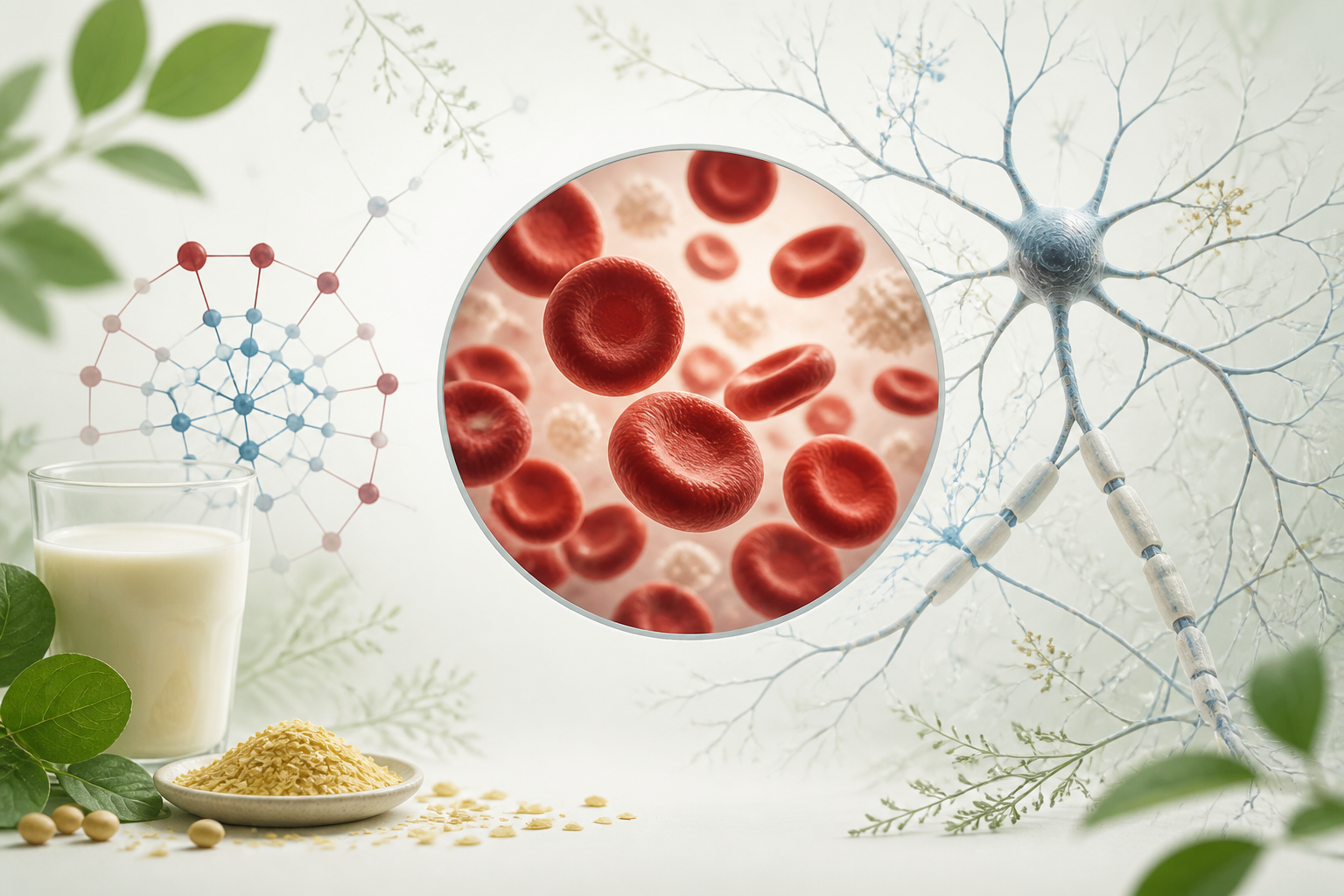
Vitamin B12, or cobalamin, is necessary for the development and function of the central nervous system, healthy red blood cell formation, and DNA synthesis. A deficiency may remain unnoticed for a long time because the body stores a certain amount of B12. This delay does not mean that spending time without a regular B12 source is safe.
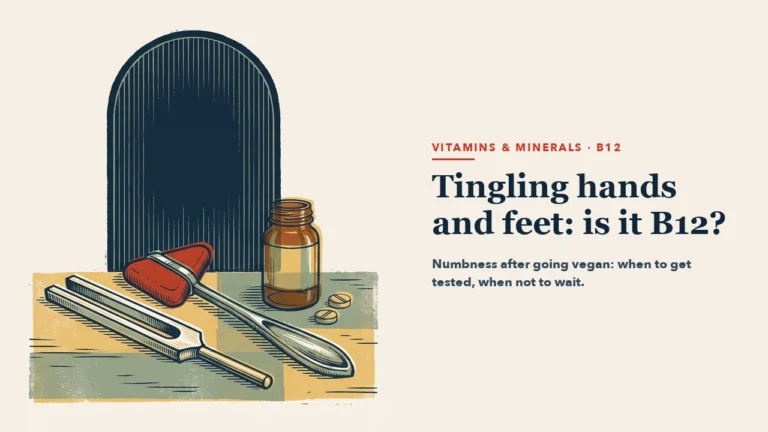
Along with fatigue, pallor, palpitations, and a sore tongue, deficiency may cause numbness or tingling in the hands or feet, balance problems, and cognitive changes. These symptoms are not specific to B12 deficiency. However, neurological findings can occur without anaemia, so assessment should not be delayed.
Why should vegans pay particular attention to B12?
The US National Institutes of Health Office of Dietary Supplements states that vitamin B12 occurs naturally in foods of animal origin and is not naturally present in plant foods in a reliable form. People following a vegan diet generally obtain B12 from fortified foods or supplements.
The key word is “fortified.” A product being plant-based, fermented, or marketed as a “superfood” does not by itself make it a reliable source of B12. If the amount of B12 is not clearly stated on the label, it is safer not to treat that product as the foundation of a B12 plan.
What are vegan sources of vitamin B12?
Depending on the product and country, possible B12 sources for vegans include:
- Unsweetened soy, oat, or pea drinks fortified with B12
- Breakfast cereals with added B12
- Nutritional yeast or yeast extract fortified with B12
- Single-nutrient or multivitamin supplements containing B12
Not every brand within the same product group contains B12, and manufacturers may change a formula over time. Check the nutrition information and the amount of B12 per serving rather than relying on marketing claims on the front of the package.
How much is needed each day?
Reference values differ slightly according to the methods used by each authority. In the United States, the recommended daily intake is 2.4 micrograms for adults, 2.6 micrograms during pregnancy, and 2.8 micrograms during breastfeeding. The European Food Safety Authority has set an adequate intake of 4 micrograms per day for adults.
These values are references used to plan the diet of a healthy person. Seeing a much higher number on a supplement label does not automatically mean “overdose” or “a better product.” B12 absorption varies with the amount taken, how the product is used, and the individual’s capacity to absorb it. Doses used to treat deficiency also differ from ordinary dietary requirements.
Treatment doses for a diagnosed deficiency should therefore not be confused with a preventive plan for a healthy person.
What should you consider when choosing a supplement?
A supplement should not be chosen solely on the basis of the “highest dose” or the “most expensive form.”
1. Form of vitamin B12
Cyanocobalamin and methylcobalamin are common in supplements; adenosylcobalamin and hydroxocobalamin may also be used. The NIH review states that there is no evidence showing a clear difference in absorption between the forms of B12 used in supplements. NICE also lists over-the-counter oral products containing cyanocobalamin, methylcobalamin, or adenosylcobalamin among acceptable options.
2. Dosing schedule
How often and how consistently a product is used matters as much as the dose. Before adopting a daily, weekly, or other schedule, consider the product label and individual requirements. If there is a diagnosed deficiency, pregnancy or breastfeeding, a malabsorption problem, or regular medicine use, the plan should be determined with a healthcare professional.
3. Sublingual or standard oral tablet?
Sublingual B12 products can be effective, but direct comparisons are few and small. Current studies have not shown that sublingual administration at equivalent doses is clinically superior to a standard oral tablet. This is not proof of definitive equivalence.
An appropriate dose, consistent use, product quality, and the person’s medical circumstances are more important when making a choice.
Who should seek professional assessment?
A vegan diet is a risk factor for low B12, but it is not the only cause. If any of the following applies, correcting diet alone may not be sufficient:
- Fatigue, pallor, palpitations, or a sore tongue
- Numbness or tingling in the hands or feet
- Changes in balance, walking, memory, or attention
- Pregnancy or breastfeeding
- Older age
- Coeliac disease, Crohn’s disease, or another malabsorption disorder
- Stomach or small-intestinal surgery, particularly bariatric surgery
- Long-term use of metformin, proton pump inhibitors, or other medicines that can affect B12 status
- A previous low or borderline B12 result
NICE specifically emphasises that B12 deficiency should not automatically be attributed to diet. Other causes, including autoimmune gastritis, gastrointestinal disease, surgery, and medicines, may need to be investigated.
How are B12 test results assessed?
When deficiency is suspected, total serum B12 or active B12 may be used for the initial assessment. If the result is borderline, additional tests such as methylmalonic acid (MMA) or homocysteine may be considered according to the clinical situation. Results should be interpreted alongside the laboratory reference range, symptoms, kidney function, pregnancy, and any supplements being used.
Starting a high-dose B12 supplement on your own immediately before testing can raise the result and make the underlying problem more difficult to assess. If neurological symptoms are present, however, assessment should not be delayed. The order of testing and treatment should be decided by a physician according to the individual situation.
Common mistakes
“I have followed a vegan diet for a while and have no symptoms, so I do not need B12.”
Symptoms can take time to appear because the body stores B12. Having no symptoms does not remove the need for a regular, reliable source.
“I use spirulina, seaweed, or fermented products, so that is enough.”
Products without a verified amount of B12 on the label should not be treated as reliable sources. A B12 plan should be based on fortified products with a clearly stated amount or on an appropriate supplement.
“The highest dose is the best choice.”
Dose alone is not an indicator of product quality. Daily requirements, preventive use, and treatment of deficiency are different concepts.
“My B12 result is normal, so none of my symptoms can be related to B12.”
A single result may not be sufficient in every situation; supplements being used and clinical findings can affect interpretation. On the other hand, fatigue and neurological symptoms have many other possible causes. Appropriate assessment is preferable to self-diagnosis.
Practical checklist
- Write down whether your daily or weekly routine includes a reliable B12 source.
- Check the amount of B12 per serving in fortified products.
- If you take a supplement, note its form, dose, and frequency of use.
- Tell your pharmacist or physician if you take metformin, acid-suppressing medication, or another medicine that may affect absorption.
- Seek individual assessment if you have neurological symptoms, are pregnant or breastfeeding, or have had surgery or have a malabsorption problem.
- Recheck labels periodically because product formulations can change.
Conclusion
Managing B12 on a vegan diet is not difficult, but it should not be left to chance. The essential approach is to use reliable fortified foods or an appropriate supplement consistently, check labels, and seek professional assessment when individual risks are present. Most importantly, do not confuse ordinary dietary requirements with treatment for a deficiency.
Medical disclaimer: This content is for general information only. It is not individual diagnosis, treatment, a prescription, or a recommendation for a supplement dose. If you have symptoms or laboratory results, are pregnant or breastfeeding, have a chronic condition, or take regular medication, consult your physician, pharmacist, or dietitian.
References
- NIH Office of Dietary Supplements — Vitamin B12 Fact Sheet for Health Professionals
- NICE NG239 — Vitamin B12 deficiency in over 16s: diagnosis and management
- NHS — The vegan diet
- EFSA — Dietary reference values for cobalamin
- Republic of Türkiye Ministry of Health — Türkiye Dietary Guidelines (TÜBER) 2022
Editor and scientific reviewer: Anıl Güler, Pharmacist
Last reviewed: 14 August 2026