How to Build a Balanced Vegan Plate
A balanced vegan meal does not need to be complicated, but it should do more than simply remove animal products. A useful plate brings together a substantial plant-protein source, a carbohydrate-rich staple, vegetables or fruit, and a source of unsaturated fat. Across the day, fortified foods and a reliable vitamin B12 strategy also matter.
What does a balanced vegan plate look like?
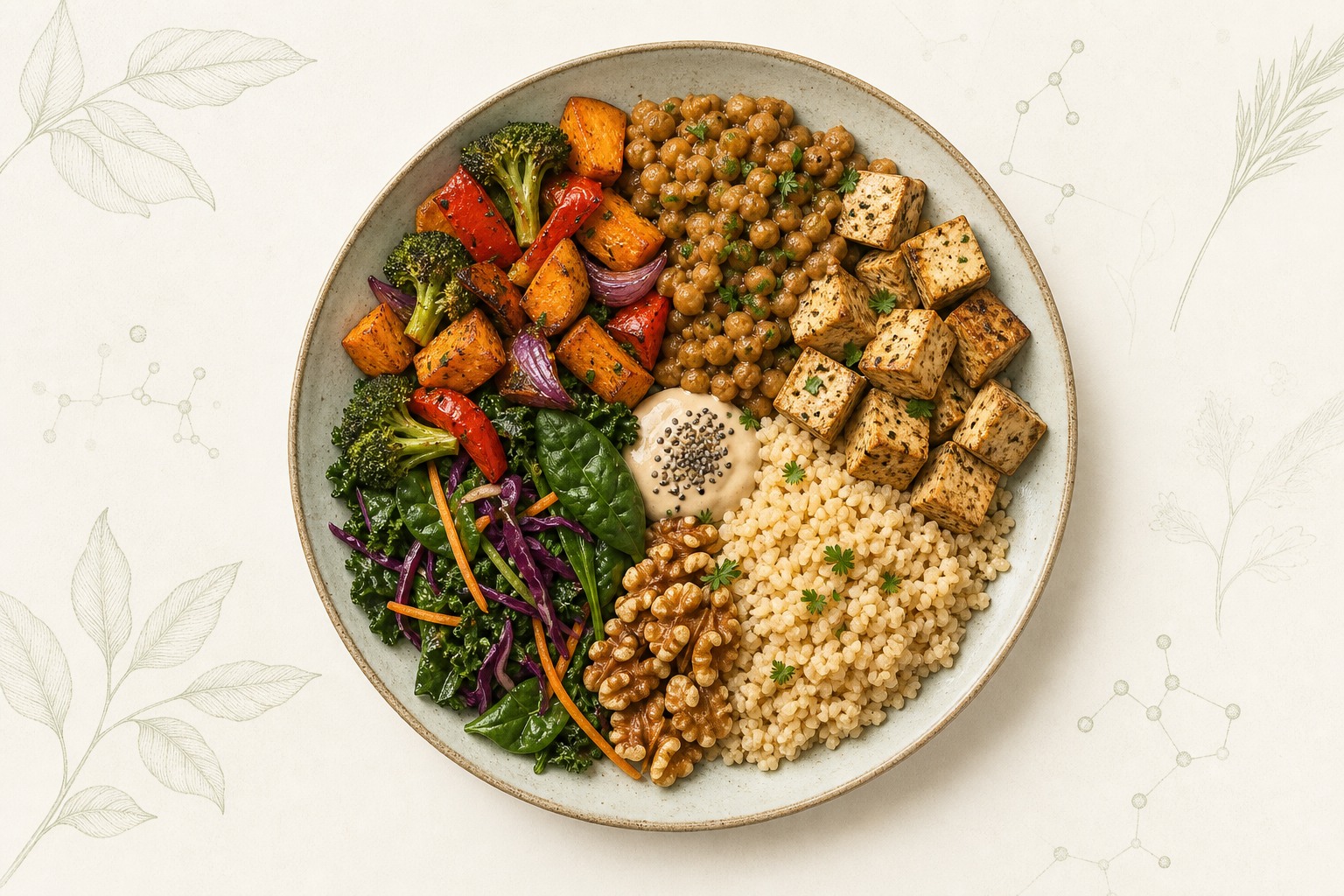
For many generally healthy adults, the following pattern—adapted from Health Canada’s plate model—is a practical starting point:
- About half the plate: vegetables and/or fruit
- About one quarter: a protein-rich plant food
- About one quarter: a wholegrain or another starchy food
- Alongside or on top: a modest source of unsaturated fat and, when useful, a fortified food
These fractions are not physiological requirements. They are a simple way to avoid meals made almost entirely from one food group. Someone with high energy needs, a small appetite, pregnancy, older age, an eating disorder history or a medical condition may need a different balance and individual advice.
1. Start with a clear protein anchor
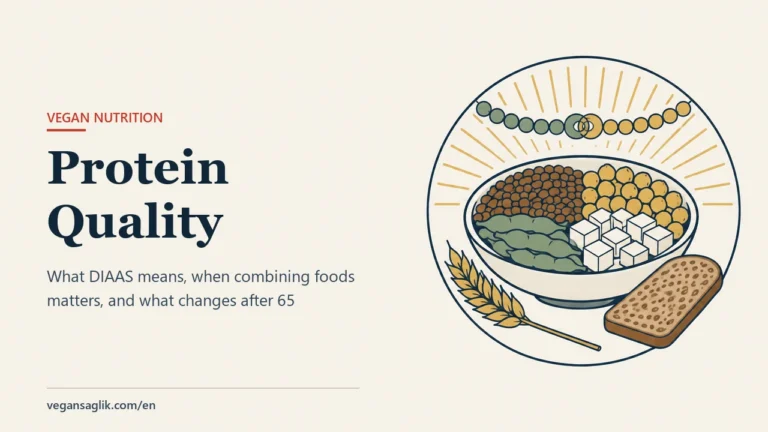
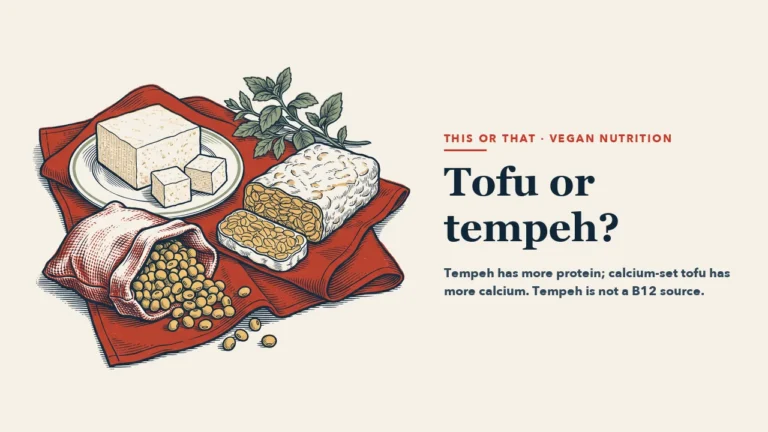
Choose a food that makes the protein source obvious rather than relying on the small amounts scattered across vegetables and grains. Useful options include lentils, chickpeas, beans, tofu, tempeh, edamame, textured soy protein, seitan if gluten is suitable, and some minimally processed legume-based products.
Protein needs are not identical for everyone. EFSA’s population reference intake for healthy adults is 0.83 g/kg body weight per day, while needs can be higher in situations such as pregnancy, recovery from illness or intensive training. The purpose of the plate method is therefore not to calculate an exact requirement; it is to make a meaningful protein source a routine part of meals.
2. Add a carbohydrate-rich staple
Whole grains and other starchy foods provide energy, fibre and a range of micronutrients. Options include oats, bulgur, wholegrain bread or pasta, brown rice, quinoa, potatoes and sweet potatoes. Wholegrain choices can support fibre intake, but refined grains are not “forbidden”; tolerance, availability and the rest of the diet matter.
A plate that contains only salad and a few spoonfuls of legumes may look healthy yet provide too little energy for some people. A substantial starch portion is especially important for people with higher activity levels or reduced appetite.
3. Use vegetables and fruit for variety—not decoration
Vegetables and fruit add fibre, vitamin C, folate, potassium and many other compounds. Rotate types and colours over the week instead of expecting one “superfood” to cover everything. Fresh, frozen and canned options can all contribute; for canned foods, salt or added sugar may be worth checking on the label.
Pairing an iron-containing food such as lentils, beans or tofu with a vitamin C source—pepper, citrus, kiwi, broccoli or tomato, for example—can improve the absorption of non-haem iron. This does not turn a meal into a treatment for iron deficiency, but it is a useful everyday habit.
4. Do not forget fats
Fat supports energy intake and the absorption of fat-soluble vitamins. Tahini, nuts, seeds, avocado and unsaturated vegetable oils can be used in amounts that suit the meal and the person’s energy needs.
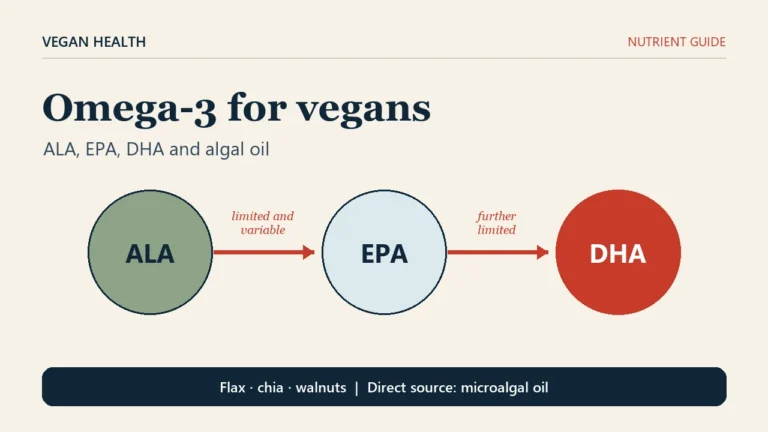
For alpha-linolenic acid (ALA), an essential omega-3 fatty acid, practical plant sources include ground flaxseed, chia seeds, walnuts and rapeseed/canola oil. Conversion of ALA to the long-chain omega-3s EPA and DHA is limited. Whether an algae-derived DHA/EPA supplement is appropriate depends on life stage, diet and clinical context; it should not be presented as an automatic requirement for every adult.
What the plate picture cannot guarantee
Vitamin B12
Unfortified plant foods are not a reliable source of vitamin B12. The 2024 German Nutrition Society position states that a vegan diet can be health-promoting for the general population when it is balanced and well planned, potentially critical nutrients are covered, and vitamin B12 is supplemented. A consistent plan that includes an appropriate B12 supplement—with reliably fortified foods as additional sources—is essential; established deficiency requires clinical assessment rather than self-treatment.
Iodine
Iodine content in plant foods is often low and variable, and many plant drinks contain little iodine unless fortified. Iodised salt or appropriately fortified products may help, but more is not better: seaweed—particularly kelp and kombu—can contain very large and unpredictable amounts. People with thyroid disease, those who are pregnant, and anyone considering an iodine supplement should seek individual advice.
Calcium and vitamin D
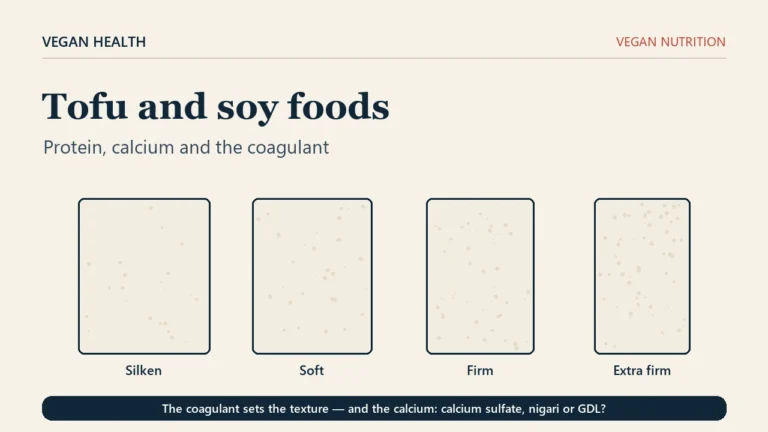
Calcium-set tofu and plant drinks fortified with calcium can make calcium planning easier; the label should be checked because products differ. Some leafy vegetables, legumes, tahini and seeds also contribute. Vitamin D intake depends on fortified foods, supplements, sun exposure and local public-health guidance, so it cannot be judged from the dinner plate alone.
Iron, zinc and selenium
Legumes, tofu, whole grains, nuts and seeds contribute iron and zinc. Vitamin C can improve non-haem iron absorption. Selenium content in plant foods varies with soil and origin, so one food should not be assumed to provide a fixed amount. Symptoms or a suspected deficiency should be assessed by a healthcare professional.
Three practical plate examples
- Lentil–bulgur bowl: green lentils, bulgur, roasted peppers and courgettes, parsley-lemon salad and tahini sauce.
- Tofu rice plate: calcium-set tofu, brown or white rice, broccoli and carrots, with sesame or rapeseed/canola oil.
- Chickpea potato tray: roasted chickpeas and potatoes, cabbage–carrot salad, tomato or citrus, and a walnut-based dressing.
The examples show a structure, not mandatory combinations. Portion sizes should follow hunger, energy needs and any individual clinical guidance.
A 30-second meal check
- Is there a recognisable protein-rich food?
- Is there enough carbohydrate-rich food to make the meal satisfying?
- Are vegetables or fruit present in a meaningful amount?
- Is there a source of unsaturated fat?
- Across the day, have fortified foods and the vitamin B12 plan been considered?
When a general plate model is not enough
Children and adolescents, pregnancy and breastfeeding, older age, competitive sport, chronic disease, food allergy, gastrointestinal disorders, unintended weight loss and a history of disordered eating can all change nutritional priorities. In these situations, a qualified physician or dietitian should adapt the plan to the person rather than forcing the person to fit a generic plate.
Sources
- Health Canada. Make healthy meals with Canada’s food guide plate. 2026.
- German Nutrition Society (DGE). Update of the DGE position on vegan diet. 2024.
- Nordic Council of Ministers. Nordic Nutrition Recommendations 2023: Recommendations.
- NHS. The vegan diet. Reviewed 2026.
- European Food Safety Authority. Population reference intakes for protein.
- NIH Office of Dietary Supplements. Vitamin B12: Fact Sheet for Health Professionals.
- NIH Office of Dietary Supplements. Iodine: Fact Sheet for Health Professionals.
- NIH Office of Dietary Supplements. Calcium: Fact Sheet for Health Professionals.
- NIH Office of Dietary Supplements. Vitamin C: Fact Sheet for Health Professionals.
- NIH Office of Dietary Supplements. Omega-3 Fatty Acids: Fact Sheet for Health Professionals.
Editor: Anıl Güler, Pharmacist
Scientific review date: 21 August 2026