Iodine in a Vegan Diet: Reliable Sources, Seaweed Risks and Supplement Safety
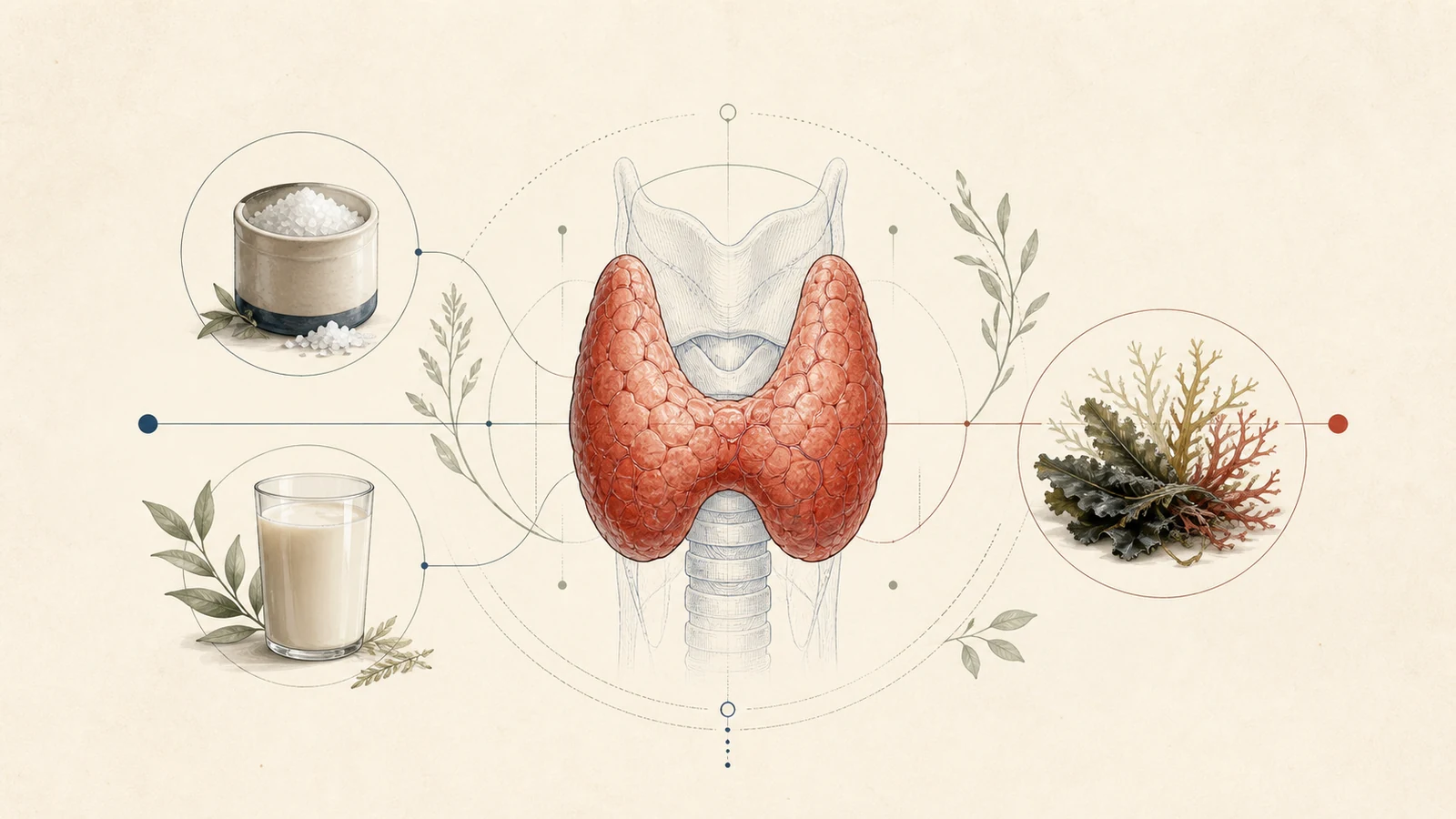
Iodine is required to make the thyroid hormones T4 and T3. These hormones influence energy metabolism and are essential for growth and neurological development. A vegan diet can provide enough iodine, but it rarely happens by simply eating a varied selection of unfortified plants. A dependable plan usually needs an identified source: iodised salt used within salt-intake guidance, an iodine-fortified food, an appropriately chosen supplement, or a combination of these.
Why can iodine require more attention in a vegan diet?
Seafood, dairy foods and eggs are important iodine sources in many mixed diets. Vegans exclude these foods, while the iodine concentration of ordinary vegetables, grains and legumes depends strongly on soil and production conditions. NIH therefore lists vegans and people who consume little or no dairy, seafood and eggs among groups that may not obtain enough iodine.
This is a planning issue, not evidence that a vegan diet inevitably causes deficiency. A 2023 systematic review and meta-analysis found lower iodine intake and status in vegan groups overall, but also highlighted small samples, inconsistent dietary definitions and difficulty estimating iodine from food tables. Individual intake can range from too low to excessive, particularly when seaweed is used.
How much iodine do adults need?
The European Food Safety Authority sets an Adequate Intake of 150 micrograms (µg) a day for adults and 200 µg a day during pregnancy and lactation. The US system uses 150 µg for adults, 220 µg during pregnancy and 290 µg during lactation. These are population reference values for generally healthy people; they are not treatment doses.
EFSA’s tolerable upper intake level for adults, including pregnancy and lactation, is 600 µg a day from all sources. The US upper level is 1,100 µg, illustrating that authorities can use different assessment methods. An upper limit is a safety ceiling, not a target. Thyroid disorders can occur with chronic excess as well as deficiency, and some people with existing thyroid disease may react at lower intakes.
Which vegan iodine sources are more dependable?
Iodised salt
Universal salt iodisation is the World Health Organization’s preferred public-health strategy for preventing iodine-deficiency disorders. In Türkiye, packaged salt sold as iodised should be identified on the label. “Natural,” rock, sea or Himalayan salt does not automatically mean iodised; the Turkish Ministry of Agriculture and Forestry notes that rock salt generally does not contain iodine and has no proven health advantage over refined iodised salt.
Iodised salt still contains sodium. Use it in place of non-iodised salt, rather than adding extra salt to the diet. The iodine delivered by a gram of salt varies with national standards, storage and the product itself, so the current package is more useful than a generic online calculation. People who need sodium restriction should not change their salt intake to correct suspected iodine inadequacy without professional advice.
Iodine-fortified plant drinks and foods
A plant drink may contain calcium, vitamin D and B12 but no iodine. In a 2020 UK market survey, only 28% of non-organic plant drinks were iodine-fortified; no surveyed plant-based cheese or fish alternative contained added iodine. Markets change and the figures cannot be applied directly to every country, but the practical lesson is durable: read the iodine line rather than assuming that all fortified nutrients travel together.
Use the amount per 100 ml and the portion you actually drink. Recheck familiar brands because formulations can change. Our Plant Drink Label Comparator includes an iodine field, but database information should always be checked against the current package.
Supplements
A supplement can provide a predictable amount when food and fortified products do not. First add iodine from every source: a multivitamin, a separate product, fortified foods and seaweed. Product names such as “thyroid support” or “kelp complex” do not establish an appropriate dose.
Do not use the upper limit as a supplement target. People with thyroid disease, a thyroid nodule, previous thyroid surgery, kidney disease, pregnancy or lactation should discuss supplementation with an appropriately qualified clinician or pharmacist. High-dose iodine can interact with antithyroid medicines; potassium iodide products also require caution with ACE inhibitors and potassium-sparing diuretics.
Why is seaweed an unreliable daily iodine plan?
Seaweed can contain iodine, but species, origin, processing and portion size produce very large differences. Analyses of commercial products have found portions ranging from useful amounts to intakes far above an adult upper limit. Kelp and kombu are especially likely to contain very high concentrations. A label may also omit iodine or provide a value that does not capture batch variation.
Seaweed can be eaten as food, but “natural” does not make it a precise supplement. Avoid treating an unmeasured pinch, powder or kelp capsule as a reproducible daily dose. If a product provides a quantified iodine amount, include it in the total and compare it with both the reference intake and upper limit.
Do soy and cruciferous vegetables damage the thyroid?
Soy, cabbage, broccoli and related foods contain compounds that can interfere with iodine use under some conditions. NIH notes that this is mainly a concern when iodine status is already marginal. For people who obtain adequate iodine and eat a varied diet, reasonable amounts of these foods are not considered a concern. Removing nutritious legumes and vegetables is not a substitute for securing a reliable iodine source.
Can symptoms or one test diagnose iodine deficiency?
Fatigue, feeling cold, weight change, dry skin and concentration problems are nonspecific. They can occur for many reasons and cannot diagnose iodine deficiency. TSH can also remain within its reference range when iodine intake is low.
Urinary iodine is valuable for assessing populations. A single spot urine sample varies too much to diagnose an individual; repeated measurements are more informative when specialist assessment is required. Do not start high-dose iodine solely because of symptoms or one uncontextualised test.
A practical five-step check
- List identifiable sources: iodised salt, iodine-fortified foods, supplements and seaweed products.
- Read amounts, not marketing terms: look for µg per portion and check how often the product is used.
- Avoid double counting: a multivitamin plus a separate iodine or kelp product can unintentionally raise the total.
- Keep sodium and iodine decisions separate: use iodised salt instead of non-iodised salt, without increasing total salt.
- Seek individual advice when risk is higher: especially during pregnancy or lactation and with thyroid, kidney or medication-related concerns.
Iodine planning should sit alongside the other nutrients that need deliberate attention in vegan diets. See our guides to vitamin B12 and calcium in a vegan diet.
Sources
- European Food Safety Authority. Dietary Reference Values for nutrients: Summary report.
- European Food Safety Authority. Summary of Tolerable Upper Intake Levels, version 10, June 2024.
- NIH Office of Dietary Supplements. Iodine: Fact Sheet for Health Professionals, updated 5 November 2024.
- World Health Organization. Micronutrients.
- Republic of Türkiye Ministry of Agriculture and Forestry. Is rock salt healthier than refined iodised salt?, 24 February 2026.
- Nicol K, et al. Iodine fortification of plant-based dairy and fish alternatives: the effect of substitution on iodine intake based on a market survey in the UK. Br J Nutr. 2023;129(5):832–842.
- Eveleigh ER, et al. Systematic review and meta-analysis of iodine nutrition in modern vegan and vegetarian diets. Br J Nutr. 2023;130(9):1580–1594.
- Aakre I, et al. Commercially available kelp and seaweed products — valuable iodine source or risk of excess intake? Food Nutr Res. 2021;65:7584. doi:10.29219/fnr.v65.7584.
Editor: Anıl Güler, Pharmacist
Scientific review date: 29 August 2026