Iron for Vegans: Sources, Absorption, Deficiency Signs, and Supplement Safety
Iron is an essential mineral required for hemoglobin production and oxygen transport. A vegan diet does not automatically lead to iron deficiency. However, because the absorption of iron from plant foods varies, food sources, meal composition, and individual risk factors should be considered together.
In brief
- Legumes, soy foods, iron-fortified cereals, whole grains, nuts, seeds, and dark green leafy vegetables can provide iron in a vegan diet.
- Iron in plant foods is mostly non-heme iron. Its absorption is influenced by vitamin C and by the overall composition of the meal.
- Tea, coffee, and certain meal components can reduce iron absorption. Rather than avoiding them completely, it may be more practical not to consume them at the same time as iron-rich main meals.
- Fatigue, shortness of breath, and dizziness are not specific to iron deficiency. Diagnosis requires clinical assessment and appropriate blood tests.
- Iron supplements should not be started solely on the basis of symptoms. The dose and duration need to be tailored to the individual.
Iron sources in a vegan diet
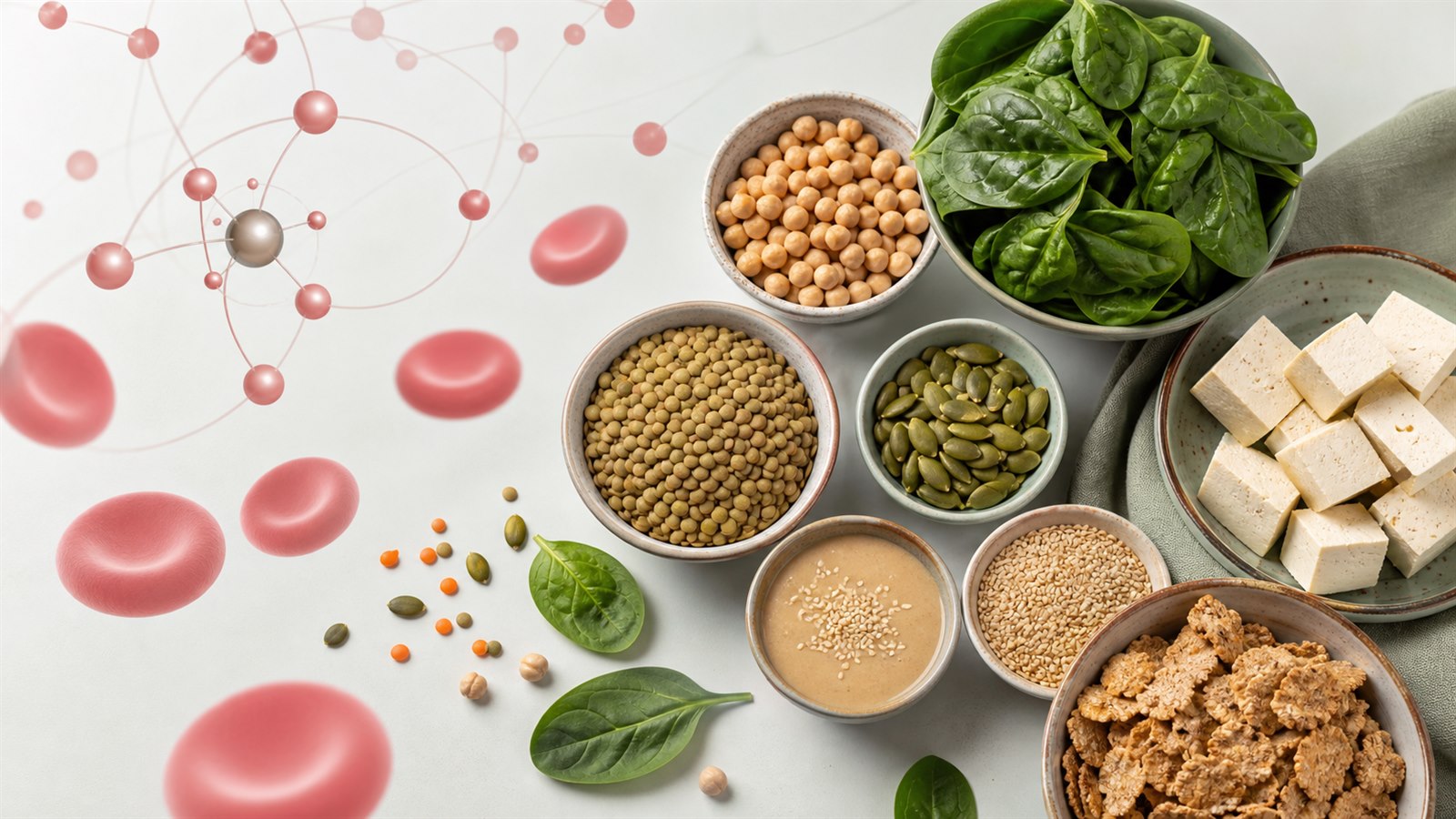
Lentils, chickpeas, beans, and peas; tofu, tempeh, and other soy foods; tahini, pumpkin seeds, sesame seeds, and some nuts; oats and other whole grains; dark green leafy vegetables; and iron-fortified breakfast cereals are useful options. When assessing how much iron a product provides, consider both the serving size and the nutrition label.
Instead of relying on a single “superfood,” a more realistic strategy is to include a variety of iron sources throughout the day while meeting overall energy and protein needs.
How can iron absorption be supported?
The absorption of non-heme iron from plant foods is affected by other components of the same meal. Pairing an iron source with a vitamin C-rich food—such as peppers, citrus fruit, strawberries, kiwi, tomatoes, or broccoli—can improve absorption.
Polyphenols in tea and coffee can reduce absorption, so it may help to avoid drinking them at the same time as an iron-rich meal. Phytate in whole grains, legumes, nuts, and seeds can also reduce absorption, but these foods remain valuable sources of iron and other nutrients. Rather than removing them from the diet, preparation methods such as soaking, sprouting, or fermentation may be used.
Iron requirements are not the same for everyone
Iron requirements vary with age, sex, menstrual blood loss, pregnancy, growth, and other sources of blood loss. Frequent blood donation, heavy menstrual bleeding, gastrointestinal disease, malabsorption, and the use of certain medicines can also affect the assessment.
For this reason, neither “I am vegan, so I must take iron” nor “I eat a plant-based diet, so deficiency cannot occur” is a sufficiently safe assumption. Risk should be assessed individually.
How is iron deficiency identified?
Possible symptoms include fatigue, weakness, shortness of breath on exertion, dizziness, palpitations, pallor, headache, and difficulty concentrating. These symptoms are not specific to iron deficiency and may have other causes.
A complete blood count and serum ferritin are commonly used in the assessment. Ferritin provides information about iron stores, but it can rise during infection or inflammation and may therefore be insufficient when interpreted alone. Depending on the clinical context, a clinician may also consider tests such as transferrin saturation and markers of inflammation.
When should an iron supplement be considered?
The decision to use a supplement should consider confirmed deficiency or a need established by a clinician, the possible underlying cause, the person’s age, pregnancy status, medicines, and treatment goals. Unnecessary or high-dose use can cause adverse effects such as nausea, abdominal pain, constipation, or diarrhea.
Iron can interact with levothyroxine, certain antibiotics, and other medicines. Ask a physician or pharmacist about appropriate dosing intervals. Iron-containing products must be stored out of children’s reach because accidental ingestion can cause serious poisoning.
Practical checklist
- Include a variety of legumes, soy foods, seeds, nuts, whole grains, or fortified products each day.
- Add a vitamin C-rich food to meals that contain an iron source.
- Consider having tea and coffee at a different time from iron-rich main meals.
- Seek individual assessment if you have heavy menstrual bleeding, are pregnant, donate blood frequently, or have a condition that affects absorption.
- If symptoms occur, investigate the cause instead of starting a supplement without assessment.
This article is for general information only and does not replace individual diagnosis or treatment. Consult your physician and pharmacist about symptoms, laboratory results, or supplement use.
References
- NIH Office of Dietary Supplements — Iron: Fact Sheet for Health Professionals
- EFSA NDA Panel — Scientific Opinion on Dietary Reference Values for iron
- World Health Organization — Guideline on use of ferritin concentrations to assess iron status
- NHS — The vegan diet
- NIH Office of Dietary Supplements — Iron: Fact Sheet for Consumers
Editor: Anıl Güler, Pharmacist
Last reviewed: August 21, 2026